 |
The Total Solar Eclipse Disappointment in the Mediterranean (August 12, 2026)The Sun Princess was modern, LNG-powered, and majestic. The ship's displays and presentations were awesome. But in the end, the only thing that mattered was seeing the total solar eclipse, and unfortunately Princess Cruises's promise of a spectacular view was foiled by a single cloud. |
Shortly after our successful cruise in 2024 to see the total solar eclipse onboard the Zaandam (see here), Blythe and I booked a cruise on the Sun Princess for the Aug. 12, 2026 eclipse. Later, Sky & Telescope advertised their own solar eclipse cruise, again with Holland America on the Oosterdam. Though we were tempted to change our plans and switch to the new cruise, we liked the idea of a 21-day cruise throughout the Mediterranean Sea, plus the benefit of flying into and out of Barcelona.
Circumstances for the 2026 eclipse were different to the previous eclipse. The eclipse occurred at a low altitude near the end of its track along the Earth. The duration of totality was shorter. And by a month prior to the event, the prospect of smoke from forest fires in Spain and France added to the risk.
 |
|

| The total solar eclipse of Aug. 12, 2026, was visible from Greenland, Iceland, Spain, and into the Mediterranean Sea. Weather prospects were best in Spain and further east. |
We left Vancouver, BC, Canada on Aug. 1, and stayed in Toronto until Aug. 6, visiting relatives. I took my 135 mm telephoto lens from the previous eclipse, plus a new 70 mm f/5.7 Celestron telescope (I felt that the 4" Meade telescope was a bit too powerful and heavy for the international flight). On Aug. 6, we flew with Air Canada from Toronto to Barcelona, arriving on Aug. 7. After clearing customs, we took a taxi to our hotel near the cruise ship terminal and tried to adjust for the six-hour time zone difference. The next morning, we checked out and boarded the Sun Princess.
|
|
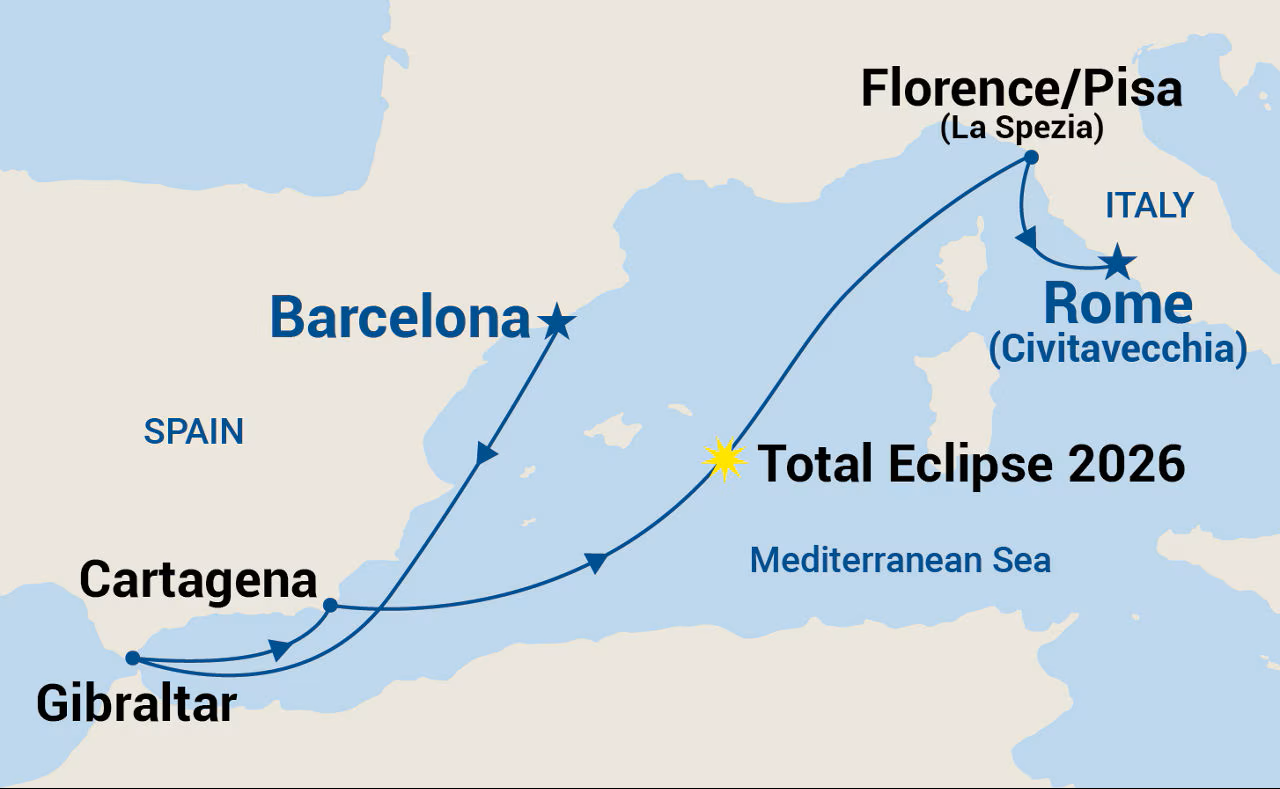 |
The first seven days of the Sun Princess's itinerary included stops in Spain and Italy. The eclipse was actually observed on Aug. 12 west of the Balearic Islands. |
|
|
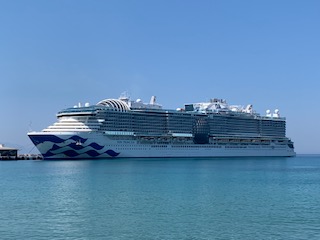 |
The Sun Princess in Kuşadası, Türkiye. |
We had two port stops before the solar eclipse, in Gibraltar and Cartagena. On the morning of the eclipse, on Aug. 12, we had a quick breakfast and took our eclipse gear up to Deck 18 portside at 9:40 a.m., which we had previously scouted out and liked because of the low railings which our tripods could see over. Off in the distance and behind us was another cruise ship. We were thrilled that it was the Holland America Oosterdam, with the Sky & Telescope group onboard, and that we seemed to be on course to see the eclipse from the same location as them. Since Deck 18 was filling up, we picked a spot and unloaded the two tripods. I noted a few puffy clouds overhead and to the south; the north (where we were heading) looked clear. By 12 noon when the Captain gave an update, there were just a few clouds to the south, clear overhead and to the north. The Captain announced that we were travelling at 9 knots and would arrive at the center-line at 4:30 pm, at the following coordinates: latitude +39o50.9', latitude +001o38.6'. Everything seemed perfect.
And then, alas, things started to change. Shortly after noon, we realized that the Oosterdam had changed course and was pulling away from us, heading further to the west. Did they know something we did not know? And not long after arriving at the observing location, we noticed a slight buildup of clouds to the west, close to the horizon, but posing a real danger as the Sun would be so low in the sky during totality.
|
|
 |
One cloud seemed to be getting bigger. I was concerned enough to take a picture of it at 6:17 p.m., 2¼ hours prior to totality. It did not seem to be moving, but the Sun's motion was carrying it closer with every passing minute. |
|
|
 |
We await the eclipse with our photography gear. The 135 mm telephoto is in front of the Celestron telescope. |
By first contact at 7:37 p.m., the Sun was on the cloud's wispy edge, not affecting the initial partial photographs. But exposures progressively increased as the Sun sunk deeper into the cloud. Incredibly, the resident astronomers continued to insist that conditions were perfect. I wondered to myself, "What ship are they on?" Sure enough, the combination of thicker clouds and the fading crescent meant that the Sun disappeared a few minutes before totality. By then, the mainly clear sky to the north (right of the Sun) was darkening quickly, then swept over the cloud as totality began. The progression of the eclipse was quite evident in real time, and it was not long before the sky to the north brightened, the edge of the shadow passed over the Sun and the total eclipse ended. Fortunately, Blythe with her iPhone recorded the best images, showing clear skies to the north and south, with Venus shining brightly to the upper left of the Sun.
Local times of the eclipse based on my EclipseLive 3.0 software and DT = 69.10 seconds were:
First contact (start of partial eclipse): 7:37:42 p.m.
Second contact (start of total eclipse): 8:31:00 p.m.
Maximum eclipse: 8:31:49 p.m.
Third contact (end of total eclipse): 8:32:38 p.m.
Duration of total eclipse = 1m38s
|
|||
|
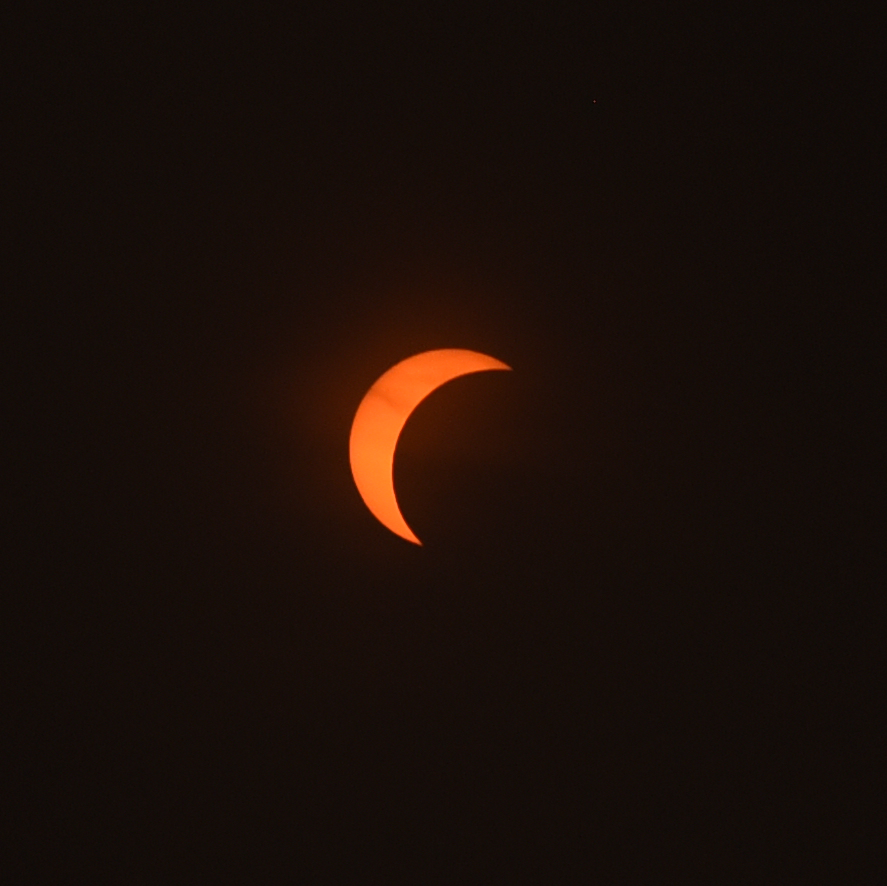
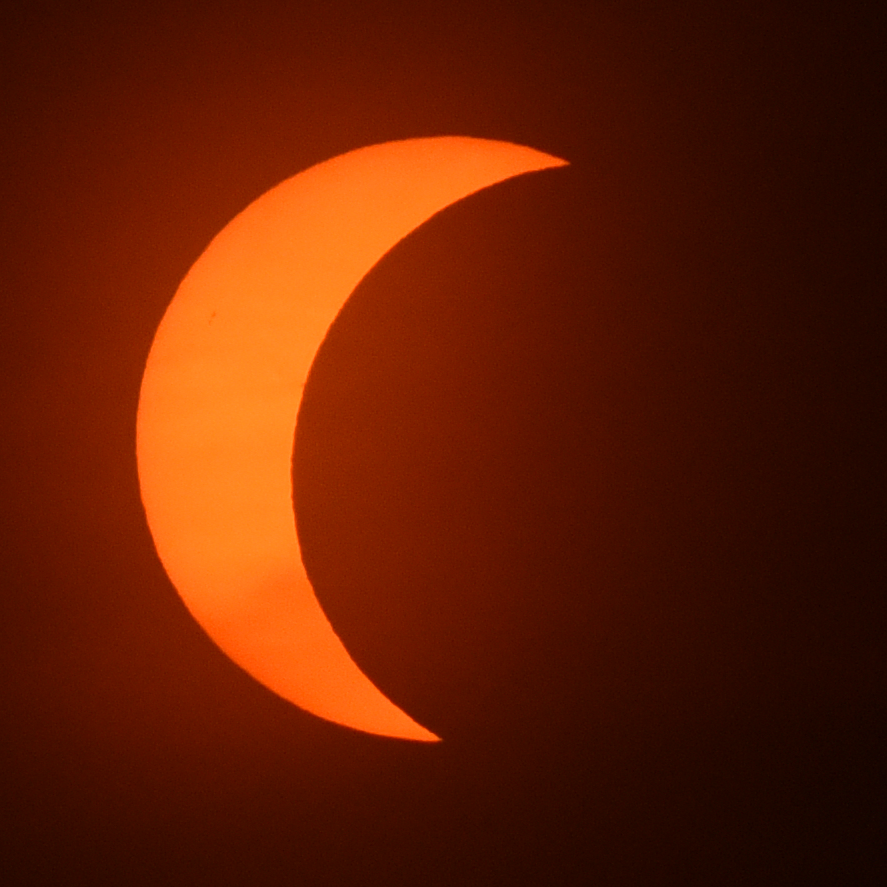
| The relative image scale during the initial partial phase of photographs from the Celestron 70 mm f/5.7 telescope (focal length = 400 mm) and the 135 mm telephoto lens shows clearly here. |
|
|
| The darkening of the clouds is apparent around the clouded-out Sun. |
|
|
| Venus was visible to the upper left of the clouded-out Sun, with the twilight glow prominent on both sides. |
|
|
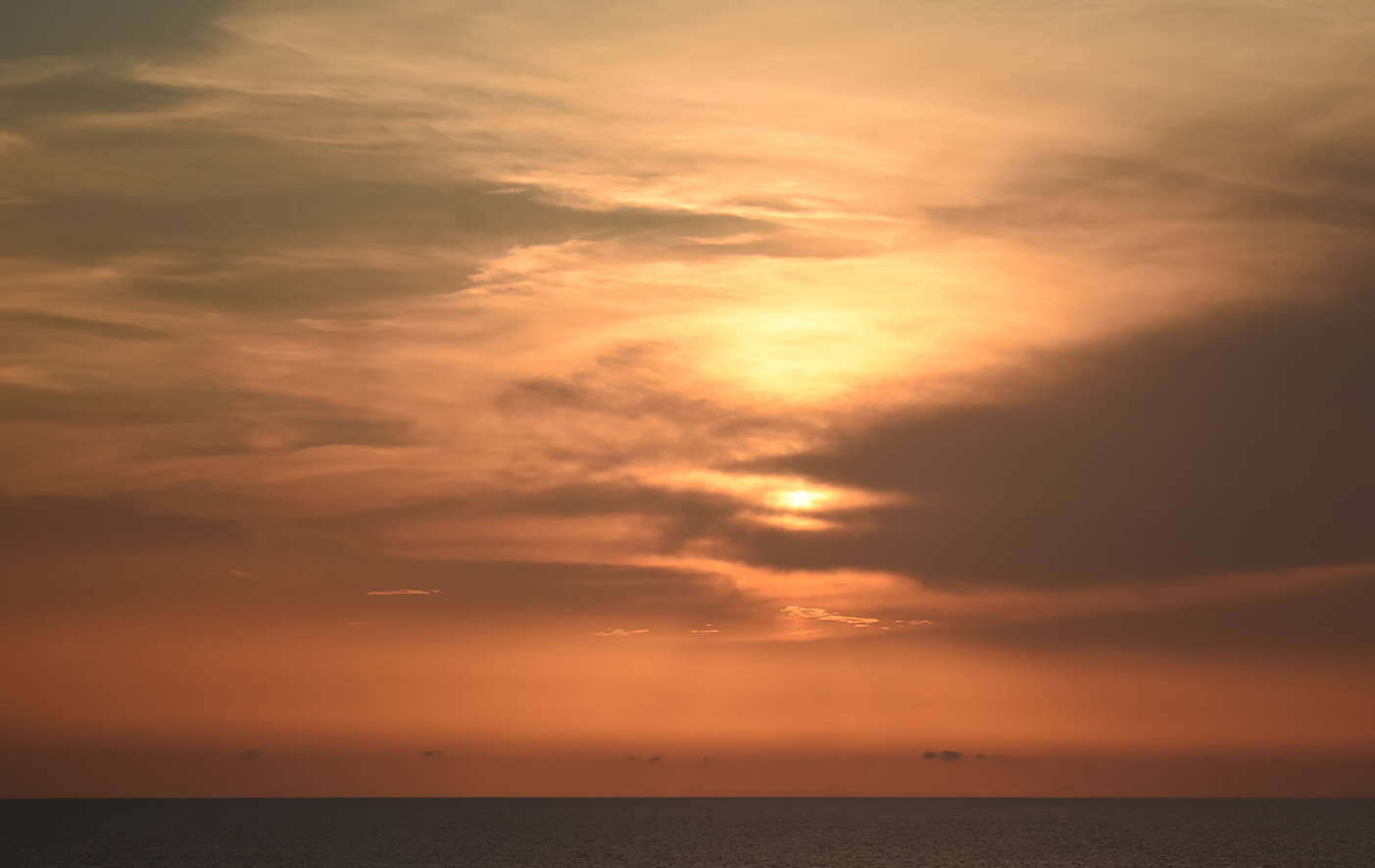 |
Clouds cover the Sun in this photograph taken shortly after the end of totality. |
|
|
 |
The Sun in partial eclipse emerged from clouds before setting. |
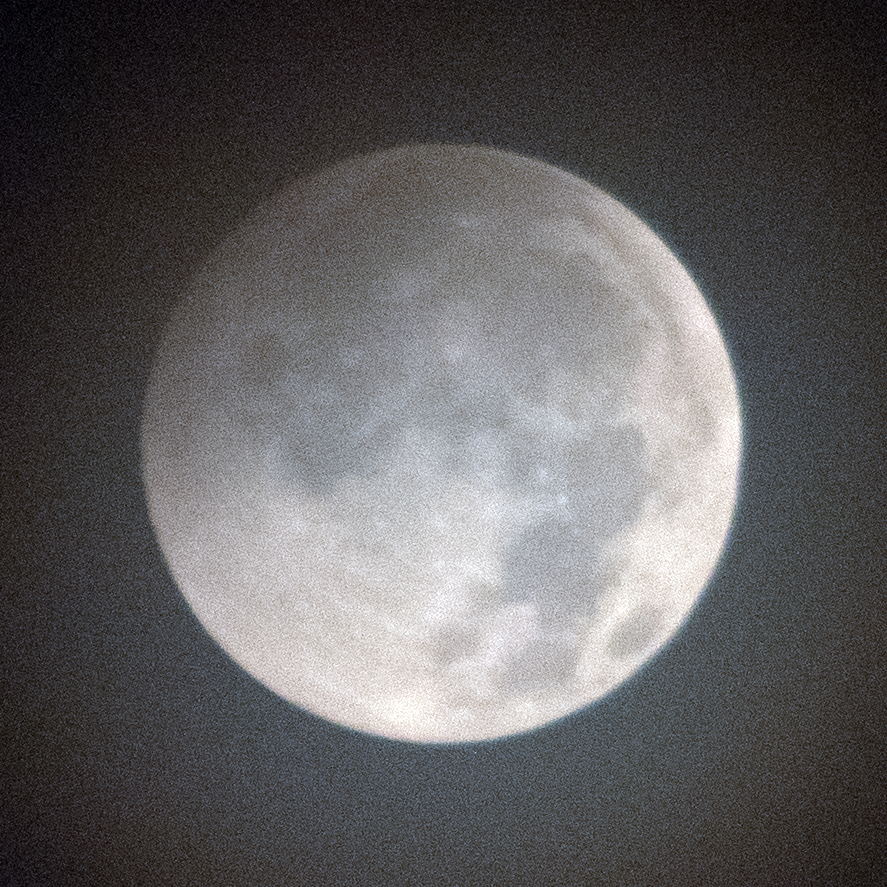
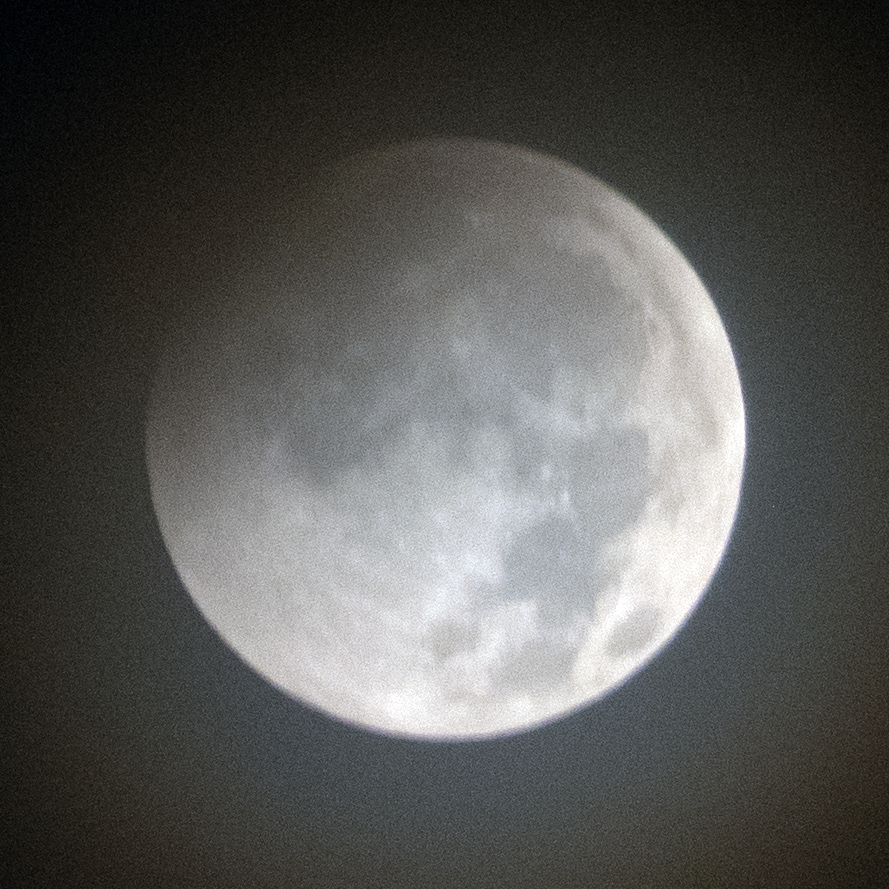
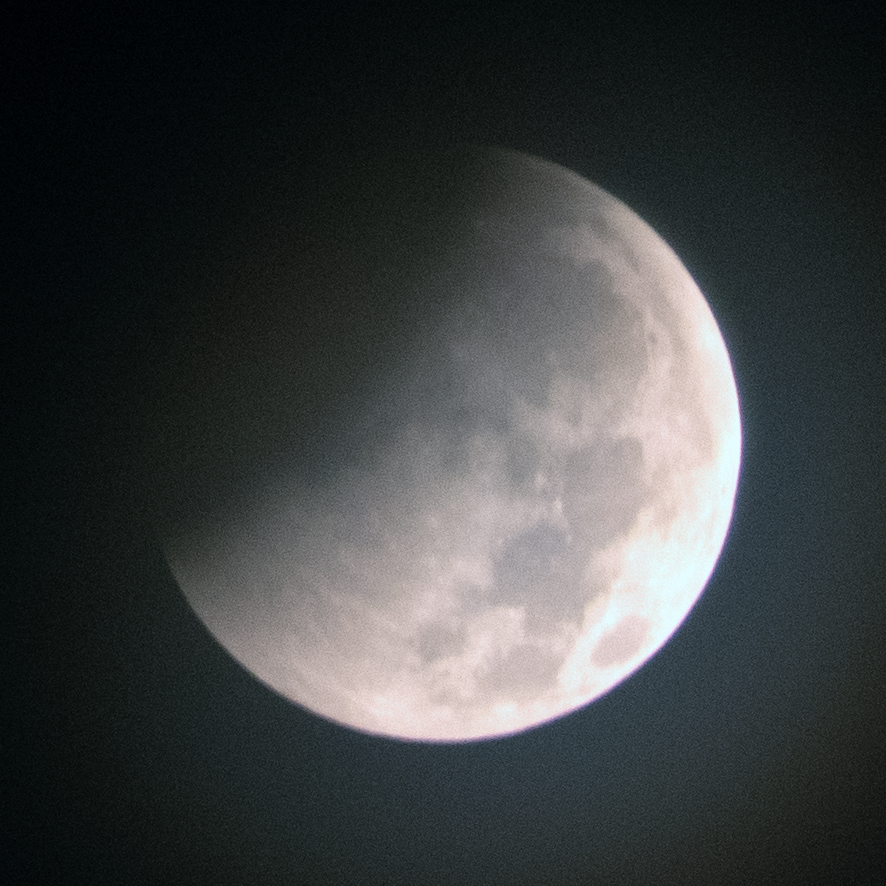
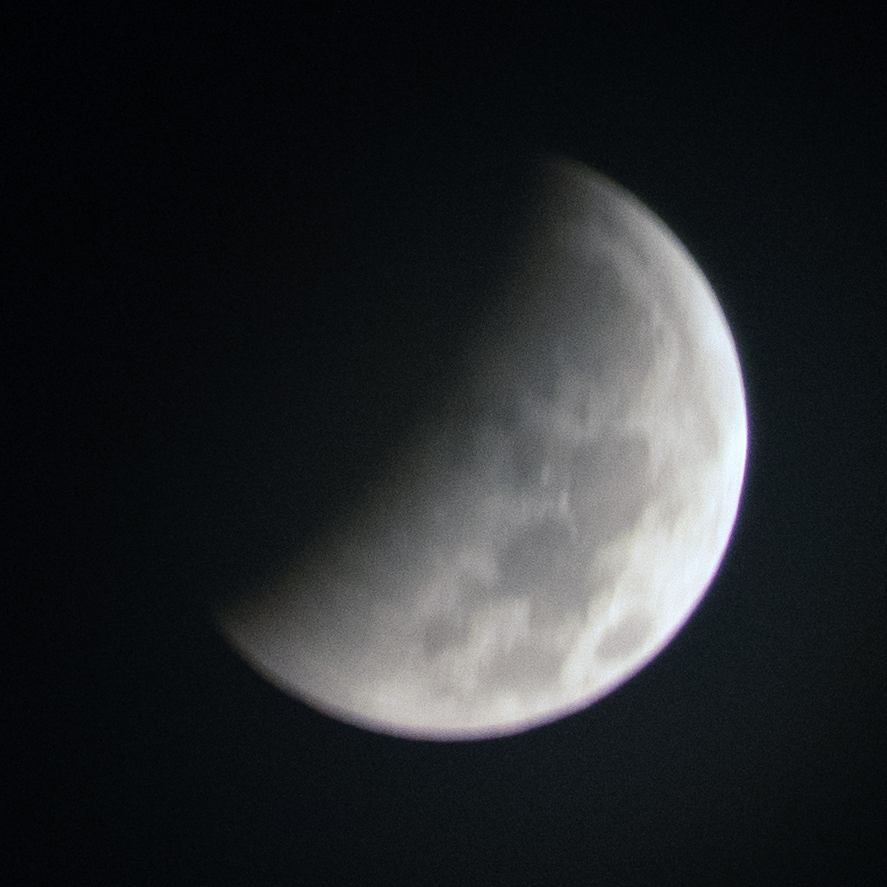
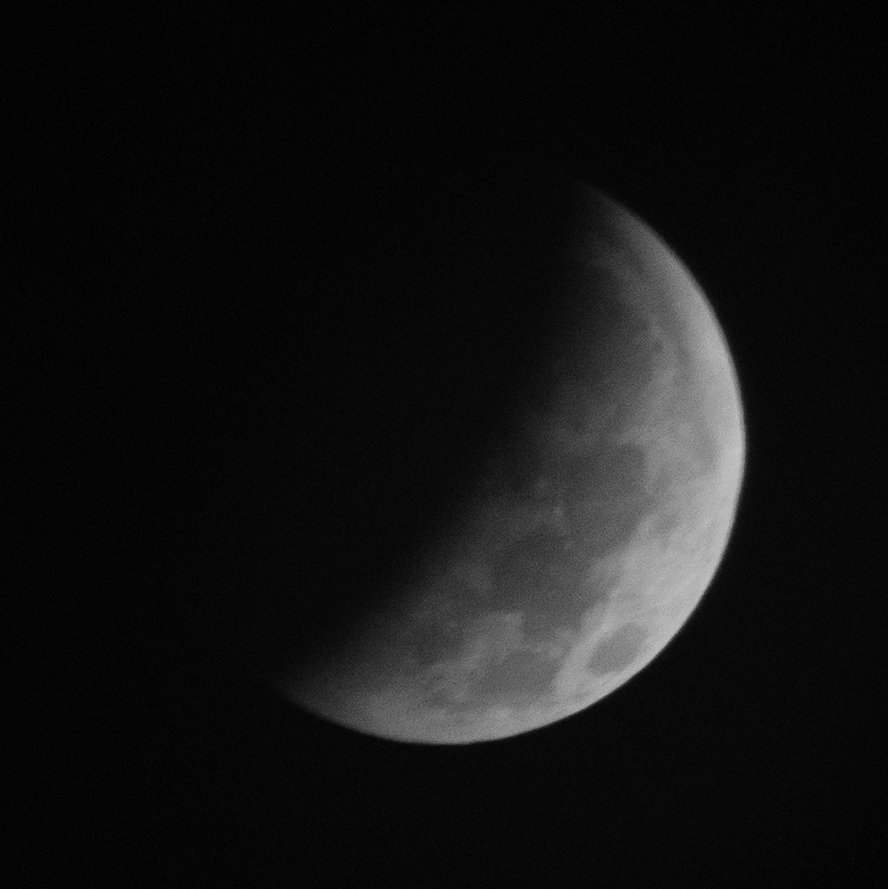
Two weeks after the solar eclipse, a nearly-total lunar eclipse occurred. In the Mediterranean, the eclipse was visible in the early morning hours leading up to sunrise. Ironically, I saw the two eclipses from the same ship location, Deck 18 portside, but in different geographic locations (west of the Balearic Islands vs. northwest of Sicily). Sky conditions were again challenging. There was excessive humidity and the telescope promptly fogged up (showing as glare in the early photographs), while later in the eclipse the Moon became dimmer as it moved lower in the sky and the eclipse progressed.
|
||||
|
|
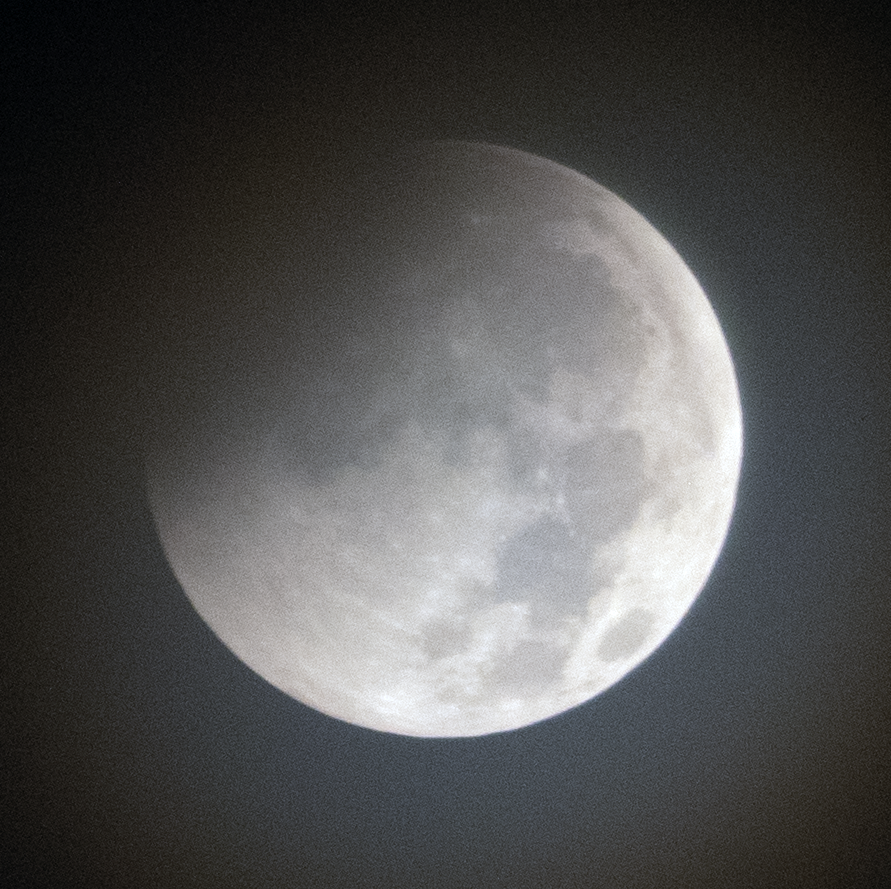
| This sequence of photographs of the Aug. 28 lunar eclipse was taken with the telescope every 10 minutes starting at 4:25 a.m. local time. The partial eclipse started at 4:33 a.m. Exposures were longer than expected due to the fog and there was some wind vibration. |
|
|||
|
|
|
|
|
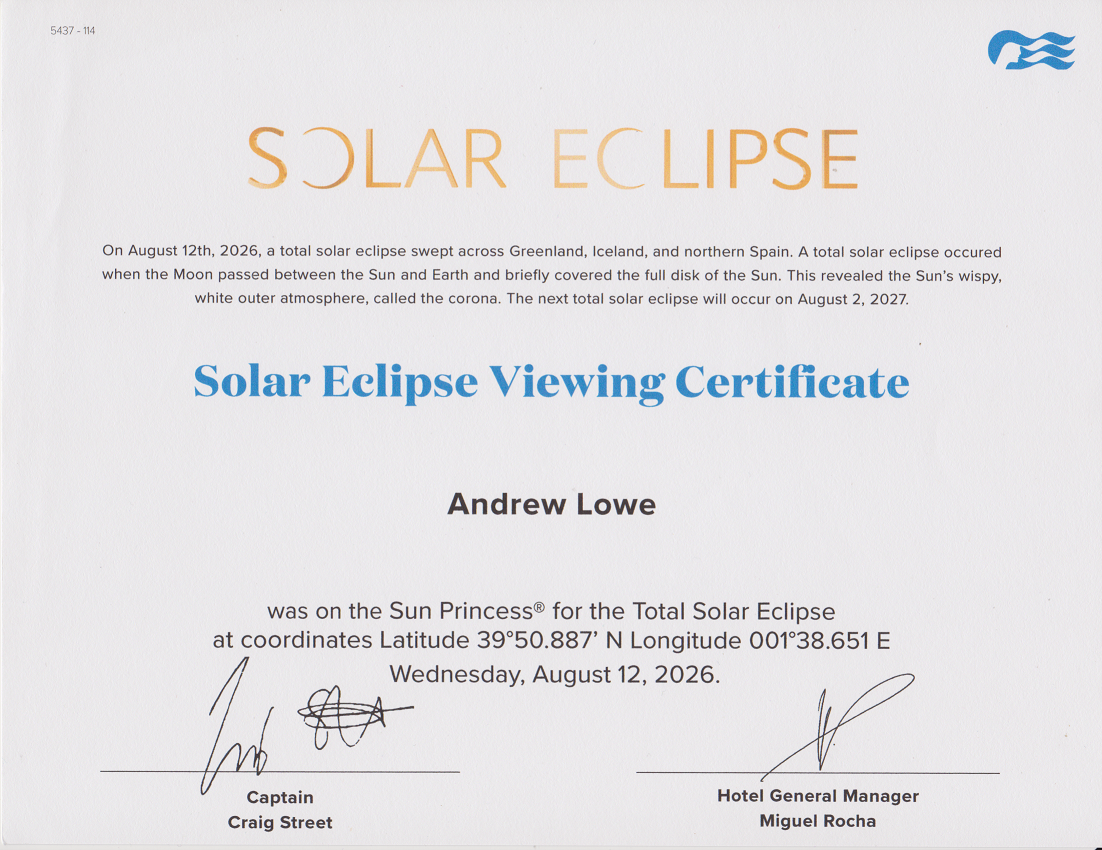 |
Although we didn't see the eclipse, we did know the ship's position to ±0.0005' (±0.93 m), 876 m north of the centreline. |
So what went wrong? With all respect to the resident astronomers onboard, they were theoretical experts and completely inexperienced for the job of directly us into clear skies for totality. The ship's officers had access to the latest satellite photography, but from the beginning the goal was to lead us to a predetermined position on the centerline regardless of local weather conditions. Time and again, success only occurred with a flexible schedule to avoid clouds, and cruise ships which followed this protocol during the eclipse were successful. Sky & Telescope's Oosterdam attempt was ultimately unsuccessful, but at least they tried.
What about the future? Blythe and I have signed up for a Sirius Travel tour to Egypt for the total solar eclipse on Aug. 2, 2027, and hope to have plans soon for the 2028 eclipse in Australia.
|
||||

|

| The next two total solar eclipses occur on Aug. 2, 2027 and July 22, 2028. |